

Procurement has spent a decade optimizing what happens after a request arrives. Chris Vessey argues...
Every mature enterprise business function operates on a core operating software anchor—a definitive digital nervous system designed to turn data into repeatable outcomes. Finance anchors its balance sheets in the GL; HR manages organizational structure through the HRIS; Sales scales market reach via the CRM.
Procurement never got one.
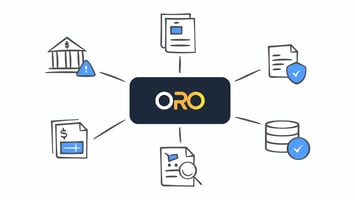
Instead, corporate procurement and supply chain teams got monolithic source-to-pay (S2P) suites under the promise that bundling transactional modules under a single vendor would resolve operational fragmentation. It was an understandable promise, but the real-world execution has been mixed: Organizations have grown more complex - with more entities, business units, regulations, policies, and M&A. Best-of-breed and point solutions are bolted on. Workflows and datasets become fragmented. Workarounds become the norm.
According to a newly released market spotlight by IDC Research Director Patrick Reymann, Orchestrating the Agentic Future of Spend: Why Procurement Needs a New Operating System, this structural gap is exactly why many enterprises are hitting a wall. Reymann's research anchors a critical new conversation in our industry: If procurement is ever going to lead itself into a scaled, AI-driven future, we have to stop trying to automate fragmented workflows, and find a new operating architecture: Procurement Orchestration.
The AI Scaling Paradox
Although enterprise procurement teams are not suffering from a lack of digital ambition, this need for operating model architecture is also evident in industry reports on AI adoption: According to Ardent Partners’ AI Rising 2026 State of Procurement AI Report, an impressive 58% of organizations have broken through the glass ceiling of skepticism and are actively running or piloting AI initiatives.
Yet, beneath that optimism lies a stark operational reality. Less than 1% of enterprise procurement functions have successfully incorporated AI into their core, day-to-day business workflows.
Why are so many teams trapped in a cycle of standalone pilots? Because AI is hitting a hard technical wall built by our existing software infrastructure. The same Ardent data reveals that 59% of procurement leaders are blocked by fragmented, dirty data structures, while 51% are structurally paralyzed by the sheer complexity of integrating new intelligence tools with rigid legacy applications.
Surgically inserting advanced AI capability piecemeal onto a fragmented software stack that was never architected for real-time data flow does not create transformation. It simply accelerates your existing operational friction.
The Five Sticky Forces That Keep Companies Stuck In Their S2P Suite
Reymann's IDC report examines this exact bottleneck. Procurement executives can precisely articulate the pain points, manual workarounds, and lifecycle constraints of their legacy software suites—yet they continue to sign multi-year renewals.
According to Reymann, five tenacious forces of structural inertia keep companies pinned to their legacy source-to-pay automation systems:
- Process entanglement: Years of customized validation rules, localized approvals, and country-specific compliance workarounds reflect deep operating decisions. They are usually not well documented and spread across teams, making any change feel like a total operational reconstruction.
- Data gravity: Supplier masters, historical transactional records, and line-item contract data require massive normalization and governance. Most lean procurement ops teams simply lack the bandwidth to clean this data while maintaining daily velocity.
- Perceived switching costs: Adjacent internal stakeholders in finance and legal hear the phrase "procurement technology update" and immediately push back, assuming any modification to spend systems will trigger a disruptive, multi-million-dollar ERP overhaul.
- Vendor leverage: Deep backend integrations, proprietary data formats, and bundled contractual pricing are intentionally engineered by legacy providers to maximize customer lock-in and make extraction cost-prohibitive.
- Risk aversion: The immediate downside of a flawed technology transition—supplier friction, visible compliance blind spots, and processing delays—is loud and public, while the strategic upside is gradual. Staying put feels like the only safe, rational choice.
Integrate And Augment First
Breaking through this inertia does not require a high-risk rip-and-replace project that makes your organization confront all five forces of lock-in simultaneously. With the right architecture that is well integrated to your existing systems, spend orchestration provides a practical way to de-risk decisions with an ‘Augment and Optimize’ strategy.
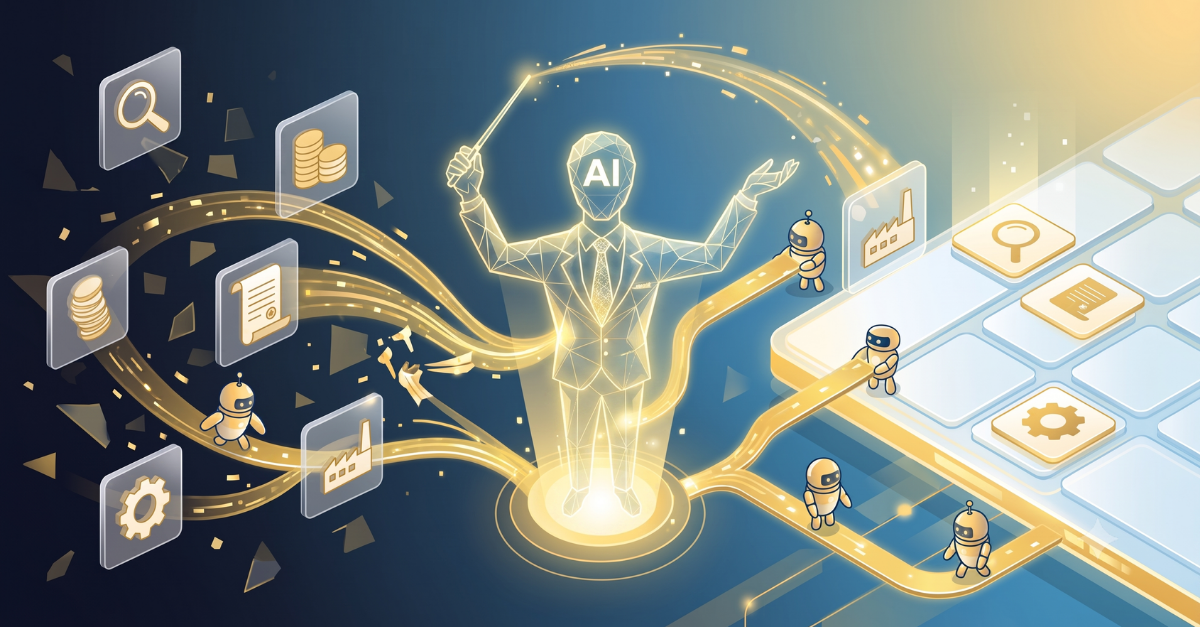
Spend orchestration acts as an intelligent coordination layer that sits directly on top of your existing tech stack. Requisitions, user interactions, and cross-functional process logic move to a walk-up user interface that requires zero employee training.
The underlying legacy suites continue as backend execution engines, preserving your stable core systems of record. The shift diminishes vendor leverage and progressively addresses process entanglement, allowing you to scale automated multi-agent workflows across your organization safely and incrementally - as quickly as your team can crystallize its new operating process vision.
According to 2026 Procurement Orchestration Study Results from The Hackett Group, the business dividend of this architectural shift is substantial: teams deploying a formal spend orchestration solution achieve a 30% median improvement in process automation efficiency and slash source-to-contract timelines by an average of 20 days.
Your activation plan
Moving past the intake ceiling and elevating your enterprise with an agentic, human-governed procurement operating system requires aligning your internal stakeholders architectural strategy. Here are three steps you can take to activate your roadmap:
1. Review the Research and share it with your CIO and CFO
Understand Patrick Reymann’s architecture evaluation framework and the critical integration requirements, knowledge graph infrastructure, and governance guardrails necessary to support and scale agentic procurement. 👉 [Get your copy IDC Research Spotlight.]
2. Think Bigger to Build a Business Case Your CFO Will Support
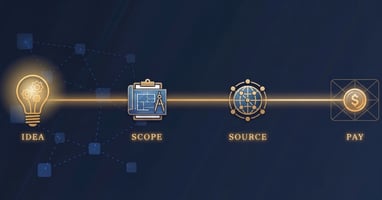
The earlier orchestration engages intent upstream, and the better connected it is, and the more procurement can influence those interactions and deliver more hard savings. Explore how Idea-to-Pay transforms procurement into a positive, friction-free business enabler. 👉 [Discover Idea-to-Pay]
3. Engage your CIO/IT Team Early on Technical Strategy
Before trying to turn generic enterprise workflow tools into specialized spend platforms, do a complete analysis of your technical and total cost of ownership (TCO) together with your IT team. Downloading our diagnostic framework on why purpose-built systems win the procurement AI build-vs-buy debate. 👉 [Read and share this Build vs. Buy analysis for procurement tech.]
By Dave McClintock, Director of Thought Leadership and Content, ORO Labs
Background: 30+ year career in technology product leadership. Most recently, Dave spent 11 years leading research on Sustainable Procurement strategy, implementation, transformation, and ROI/value creation for large enterprises at EcoVadis.